



Midjourney, once known for creating artistic universes from digital pixels, is now shifting its focus toward the deepest layers of human biology. The company’s entry into the medical hardware sector under the name “Midjourney Medical” is not simply an expansion strategy; it is being interpreted as an innovative initiative aimed at reshaping our understanding of health, aging, and bodily awareness at the very foundation of human experience.
Driven by the questions “How can we differentiate ourselves?” and “What do we want to become?”, this initiative translates the computational power of artificial intelligence into a tangible physical reality. By transforming diagnosis from a sterile clinical necessity into a seamless part of everyday life, this visionary approach stands on top of a highly sophisticated engineering framework that challenges conventional boundaries in healthcare.

For this new hardware initiative, the company strengthened its position by recruiting Ahmad Abbas, who previously worked on Apple’s Vision Pro team, in late 2023. Later, in November 2025, it further demonstrated its commitment to the field by signing a licensing agreement with Butterfly Network, a manufacturer of portable ultrasound devices. The full-body scanner developed by Midjourney goes beyond the bulky structure of traditional MRI machines by combining speed and precision with modern microchip technology. By integrating 500,000 sensors into a single ring-shaped architecture, the system achieves an unprecedented level of data density in hardware, one that has not been seen before at this scale or configuration.
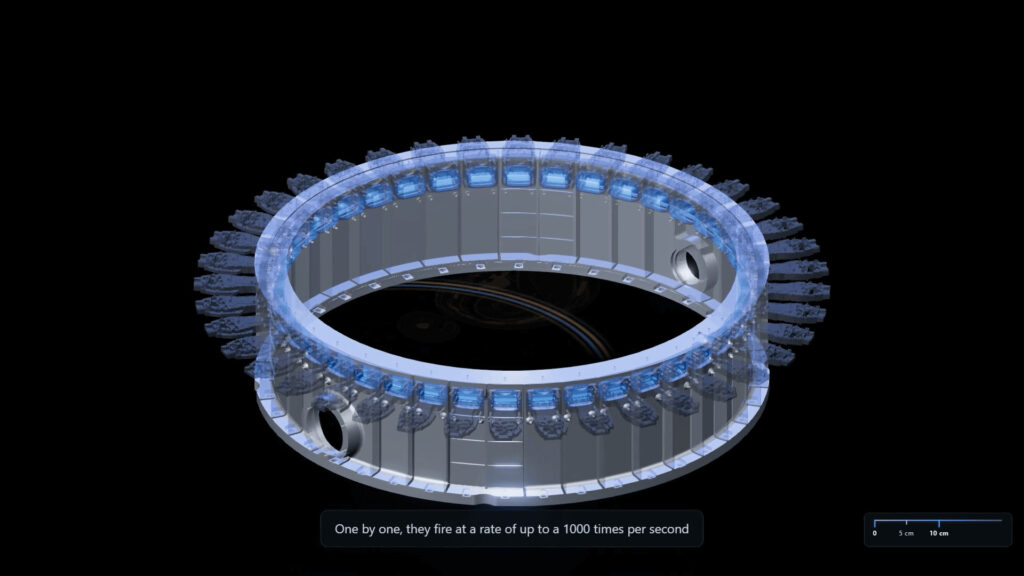
3D body map in 60 seconds
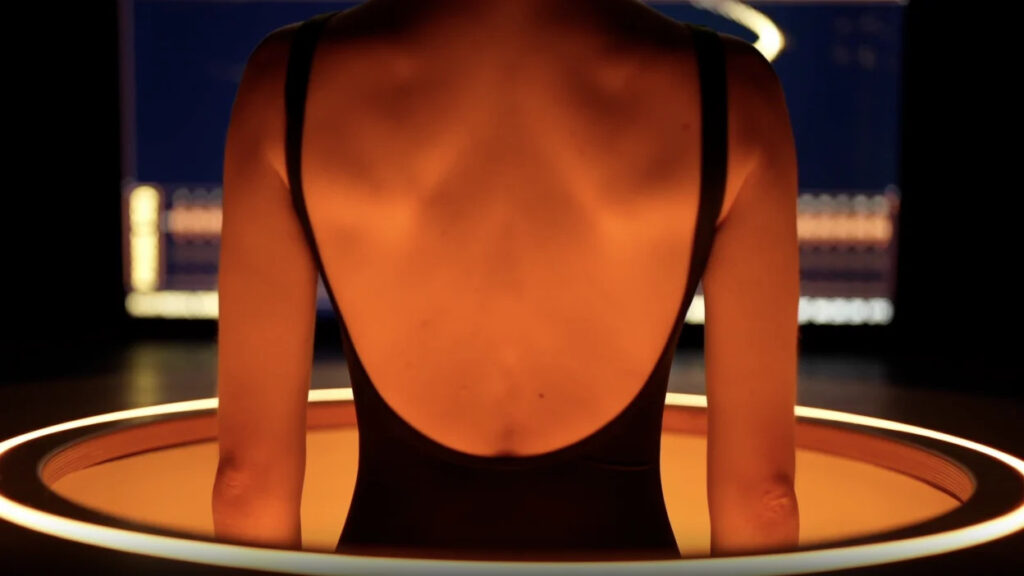
The Midjourney Scanner begins operating when patients step into a shallow pool of water illuminated by a golden light. As the person stands on a platform, it gradually descends toward the water at a speed of approximately 5 centimeters per second, while the body passes through a ring composed of half a million grain-sized sensors. Each of these sensors functions in a way similar to the echolocation system used by dolphins, operating as both a microphone and a speaker. They emit and capture ultrasonic sound waves, which echo back millions of times per second, enabling continuous high-resolution data acquisition of the entire body.
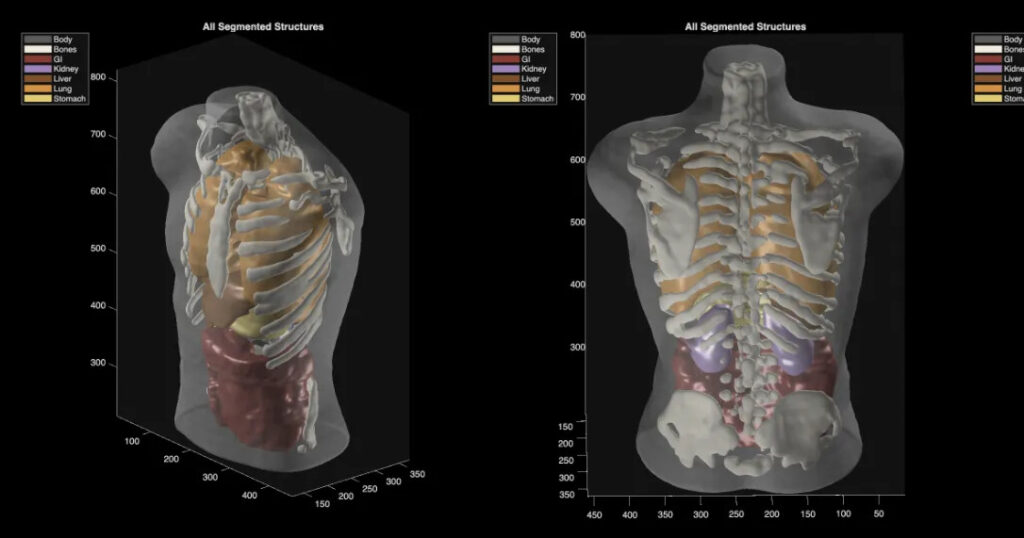
In contrast to traditional MRI scans, which can take between 60 and 90 minutes, this process is designed to be completed in just 60 seconds. During scanning, the system operates nearly 100 times faster than current MRI technologies, generating a three-dimensional body map at sub-millimeter resolution. As the ultrasonic waves emitted by the sensors pass through different types of tissue, including water, skin, fat, muscle, and bone, they are altered in distinct ways. These interactions produce terabytes of data per second. The resulting data volume is so large that a single second of scanning is estimated to be equivalent in storage size to approximately 500 hours of high-resolution internet video.
The Redesign of Medical Experience: From Clinical Environment to Spa Comfort
The clinical anxiety often associated with medical screenings is replaced by a luxury personal care experience through the Midjourney Spa concept. This strategic shift reframes medical data as a “side-effect,” transforming the traditionally intimidating hospital environment into a 24-hour social living space that feels more like a wellness hub than a clinical facility.
The first facility, planned to open in 2027 in the heart of San Francisco, is expected to include hot tubs, saunas, and cold plunge pools. Within this setting, users will generate a comprehensive health data library through an effortless 60-second session in a golden-lit pool, without even being aware of the diagnostic process taking place. In this model, the concept of the “patient” is replaced by that of an informed individual, while the scanning procedure is reframed not as a stressful appointment but as a restorative ritual. However, the realization of this global transformation depends on the technology adhering to an evolutionary roadmap as well as regulatory approval processes.
Future vision and global objectives
Over the next 12 months, Midjourney plans to improve its algorithms, conduct clinical studies to demonstrate the system’s capabilities, and transition toward a second-generation hardware design. By 2028, with the introduction of third-generation devices that will utilize custom silicon chips and deliver significantly higher imaging quality, the company aims to expand its medical capabilities further and submit the system for approval to the United States Food and Drug Administration (FDA) U.S. Food and Drug Administration. The long-term objective is to build a global network of 50,000 scanners by 2031, enabling routine health screening for up to one billion people per month worldwide.
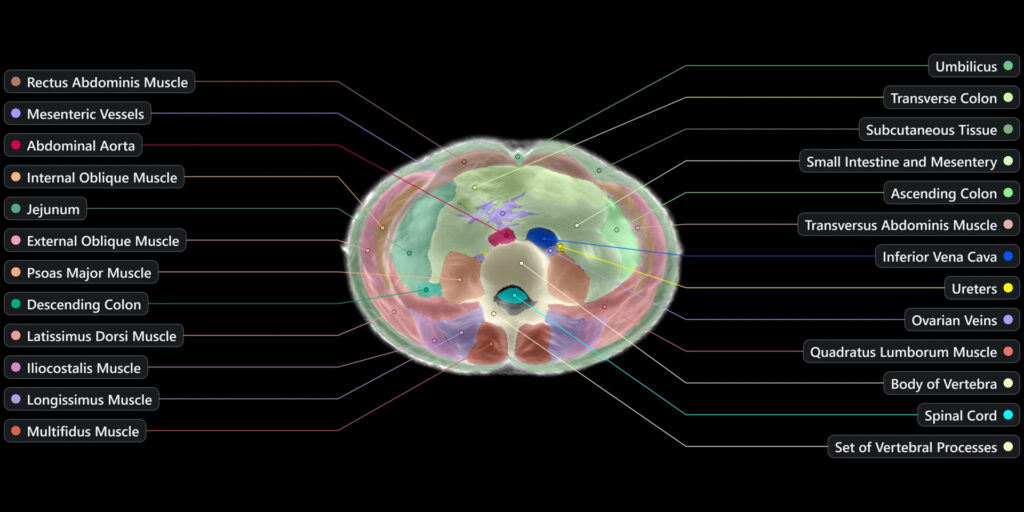
The true “paradigm shift” enabled by this technology lies in its potential to transform medicine from a symptom-driven, reactive model into a data-driven, proactive system. “Delayed diagnosis,” the biggest problem in today’s medical world, could become a thing of the past with Midjourney’s “biological surveillance” vision. Regular monthly scans may allow even the smallest anomalies to be detected before they develop into full-scale disease.
In this context, identifying a condition at its earliest stage could make it possible to reverse it through lifestyle interventions. Experts suggest that if early detection becomes widely accessible at this scale, it could potentially prevent up to 30% of global deaths and reduce healthcare costs by as much as 50% in the future. This is not merely a technological achievement, but a potential new global standard of living that could significantly extend human lifespan and reshape the foundations of preventive medicine.
Midjourney’s approach to realizing this project is considered as revolutionary as the technology itself. Rejecting traditional venture capital structures and investor-driven pressure, the company has adopted a “community-backed research lab” model. This framework ensures that the development process is guided less by commercial profit motives and more by user feedback and real-world needs. By inviting individuals into this “discovery” journey, Midjourney aims to transform healthcare technology from a closed, corporate-driven domain into a collective human project, shaped transparently and collaboratively rather than behind closed doors.

Caution is warranted: Lessons from the past and the reliability of AI-based analysis
While Midjourney Medical’s claims of potentially preventing 30% of global deaths and offering a 60-second alternative to traditional MRI technology are highly compelling, the history of medical technology repeatedly reminds us how critical it is to avoid rushing innovation in healthcare. Past cases show that even the most transformative promises can lead to serious consequences when introduced without sufficient validation.
The Theranos scandal and the Therac-25 incident remain two of the most widely cited examples illustrating why revolutionary claims must be approached with caution. Theranos attracted billions in investment by claiming it could detect hundreds of diseases from a single drop of blood, yet ultimately collapsed as a large-scale fraud. Similarly, the Therac-25 radiation therapy system, due to critical software errors, administered lethal doses of radiation to patients.
Together, these events highlight the risks of the “Silicon Valley speed” approach, characterized by rapid development, real-world deployment, and later correction, particularly when applied to healthcare and other life-critical systems.
Of course, since the system relies solely on “sound waves and water,” it does not carry risks such as exposing patients to lethal radiation, unlike the Therac-25 radiation therapy device. In that sense, it can be considered a physically much safer approach. However, in healthcare technologies, the real risk does not lie only in the hardware itself, but in how the data is interpreted.
The core capability that transforms the terabytes of ultrasonic wave data generated per second into detailed 3D medical maps of internal organs is AI-based segmentation. Unless the accuracy of these AI-driven interpretations is rigorously validated through independent clinical trials, the system may still carry significant risks related to misclassification and diagnostic errors. Similar to how incorrect blood test results from Theranos led individuals toward inappropriate medical decisions, any potential errors in analysis could have serious consequences if not properly verified.
At present, Midjourney’s underwater scanning system does not hold any diagnostic approval from the U.S. Food and Drug Administration (FDA) according to the company’s own statements. In order for the project to compete with standard MRI systems and evolve into a clinically validated medical tool, it is expected that third-generation devices, planned for 2028 and featuring custom silicon chips, will need to be developed and rigorously evaluated.
Furthermore, the fact that some medical professionals currently attribute “zero diagnostic value” to the device’s existing hardware highlights the significant distance the project still has to cover before it can be considered a reliable clinical instrument. In light of this, before being captivated by the technological appeal of warm water pools and half a million grain-sized sensors, it is essential to wait for the results of independent clinical studies and the approval processes of regulatory authorities. Maintaining a cautious and evidence-based approach remains the most rational stance when evaluating such large-scale claims centered on human health.
What is your perspective on this development? Share your views in the comments below.
Sources
Midjourney. (2026) A New Era of Midjourney. Midjourney Medical PDF.
Moon, M. (2026) Midjourney, the AI image generator, is developing a full-body ultrasonic scanner. Static Media.